menu trigger
menu trigger


7 Day 24 HoursContact US+90 (212) 417 72 85 - 86info@umutdiyalizmerkezi.comMerkez mah. Salihpaşa Cad. Sanayi Sk. No.3 Gaziosmanpaşa / İstanbul


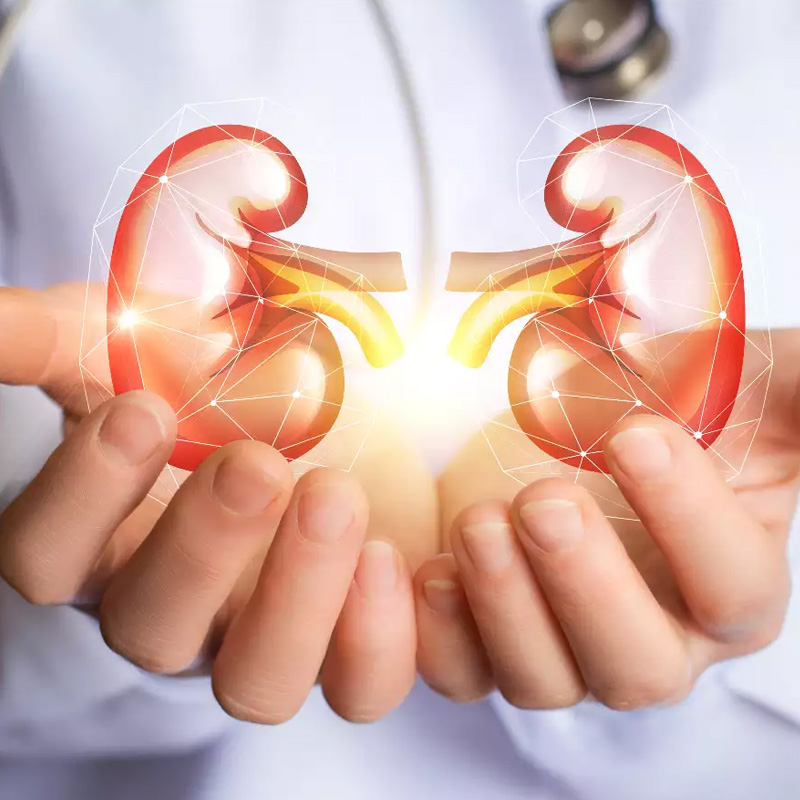
Kidney Functions
The kidneys have two main functions
1) Keeping the salt and water balance in the body and keeping various minerals in the blood at a constant level
2) To discharge waste products from the body
Approximately 25% of the cardiac output passes through the kidneys at rest. There are around 1 million filters in two healthy kidneys called glomeruli.
Each glomeril is about one pinhead and has a delicate network of blood vessels and supporting cells.
In a normal person, glomerular 100 ml per minute. Plasma filter 140 liters in about 24 hours
Approximately 138 liters of this filtrate are reabsorbed by tubules (canals) in the kidneys and the remaining 2 liters are excreted through urine.
In order to perform these functions, the kidneys need to react very quickly to changes in blood pressure and the amount of salt and water in the body.
The kidneys have three other functions, including problems that can be seen in patients with chronic kidney disease (CKD).
– Controlled water and salt balance and blood pressure and renin production
– Control of hemoglobin level by sensing oxygen delivery and secretion of erythropoid (EPO)
– Ensuring calcium balance with activated vitamin D production
Since kidneys affect blood pressure, high blood pressure kidneys, there may be a “vicious circle” of cumulative damage.
As you read the book, Vital Chronic Kidney Disease, you will learn that CKD is an important circulatory disease and not just kidney failure. The presence of CKD is also useful for identifying patients who will benefit most from reducing cardiovascular risk factors, but is also complementary to other well-known risk factors such as blood pressure and cholesterol levels.

Our Özel Umut Dialysis Center became operational in January 1999.
It is the first hemodialysis center of Gaziosmanpaşa, the most densely located district of Istanbul, and has proven that it has been performing the highest and sufficient hemodialysis since its establishment.