menu trigger
menu trigger


7 Day 24 HoursContact US+90 (212) 417 72 85 - 86info@umutdiyalizmerkezi.comMerkez mah. Salihpaşa Cad. Sanayi Sk. No.3 Gaziosmanpaşa / İstanbul


Our Kidneys and Their Functions
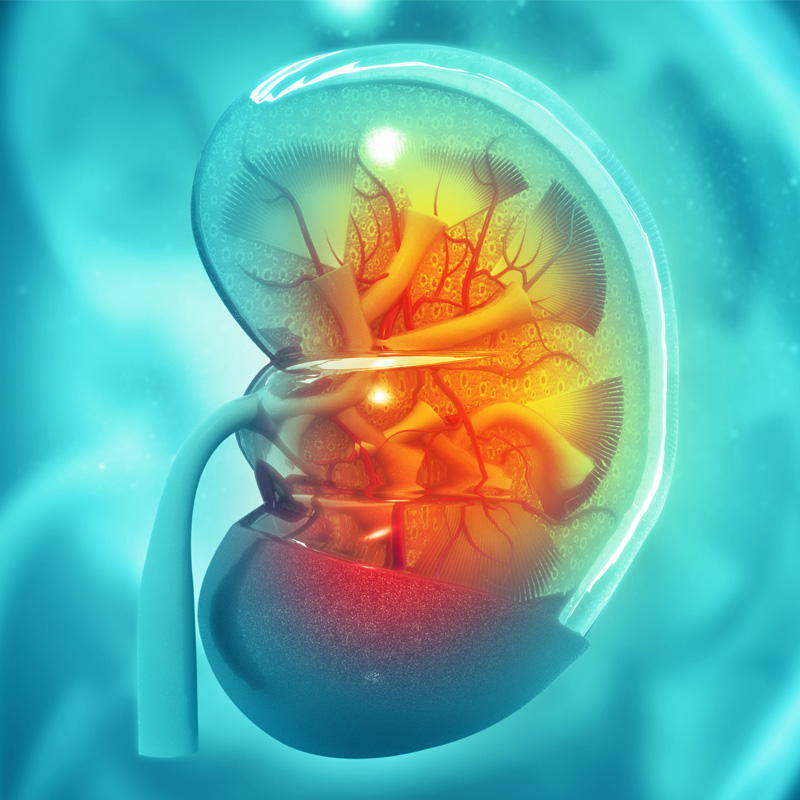
The kidneys are located on the back of the body cavity, on both sides of the spine. Our organs are 10-12 cm long, whose shapes resemble beans.
Duties of Our Kidneys:
1- Our kidneys remove excess water in our body and waste materials such as urea and creatinine from the blood and filter them out of the body.
2- They have duties to regulate blood pressure.
3- Besides salt balance, they regulate potassium, phosphorus and calcium balance.
4- They produce a substance called erythropoietin, which controls the production of red cells in the bone marrow.
5- They activate Vitamin D, which protects bone health. Kidney failure means temporary or permanent impairment of some or all of the kidney functions
KIDNEY FAILURE FINDINGS
Hypertension: High blood pressure
Edema (collecting water in the body): The first symptom may be swelling in the eyes and ankles, and in more advanced conditions, shortness of breath may occur.
Fatigue, anorexia, nausea, vomiting: It can occur as a result of accumulation of toxic substances such as urea, creatinine.
Anemia: As a result of anemia, weakness and early fatigue symptoms are seen.
Sometimes kidney failure may not give any significant symptoms until the last moment. Urea, creatinine and urinalysis that can be done easily can be understood whether there is a problem with our kidneys.
WHAT IS DIALYSIS?
Urea is the process of removing waste materials such as creatinine and excess water from the blood. There are two main methods: hemodialysis and peritoneal dialysis.
Hemodialysis
It is the process of removing waste materials and water that cannot be removed from the body by means of a semi-permeable membrane (dialysis). Dialysis patients with chronic kidney failure generally need this procedure three times a week and for four hours.
During hemodialysis, the dialysis machine passes blood from the patient through a semipermeable membrane (dialysis) and sends it back to our body. In the meantime, blood on one side of the membrane in the dialyser and a salt solution (dialysate) on the other side.
VESSEL ENTRANCE ROAD
In order to perform hemodialysis, it is necessary to take the blood of the patient from the body and take it to the hemodialysis machine and carry the blood cleaned in the dialysis back to the patient’s body. The path used for this purpose is called “vascular access path”. This path can also be defined as the “life path” of the patient. Entry way can be created permanently and temporarily. Permanent entry way is performed as a Fistula or Graft (artificial vein) by surgically joining the artery and vein under the skin. Temporary vascular access can be created with catheters inserted into large veins in the neck, chest, or groin area for patients who are not yet ready for fistula or will undergo hemodialysis for a short time. The most common and preferred way of entry is Arteriovenous Fistulas (A-V Fistula).
Fistulas are usually formed by joining the arteries and veins under the skin in the forearm or upper arm. When this is not possible, an artificial vein (graft) may be required.
Advantages of A-V Fistula:
– It is the longest lasting entry way,
– Less risk of infection,
– Less risk of bleeding,
– The risk of intravascular clot formation is lower.
Recommendations to Our Patients for A – V Fistula:
• Heavy loads should not be lifted with the fistulous arm
• Must not lie on the fistulous arm
• Tight clothing that makes fistula flow difficult should not be worn.
• Blood pressure should not be measured from the fistulous arm.
• The fistulous arm should be washed with warm soapy water every day and before dialysis.
• Fistula needles should be replaced as much as possible every session.
• Patients should control the vibration created by the current in the fistulous arm and warn their nurse and doctor when it detects a decrease.

Our Özel Umut Dialysis Center became operational in January 1999.
It is the first hemodialysis center of Gaziosmanpaşa, the most densely located district of Istanbul, and has proven that it has been performing the highest and sufficient hemodialysis since its establishment.